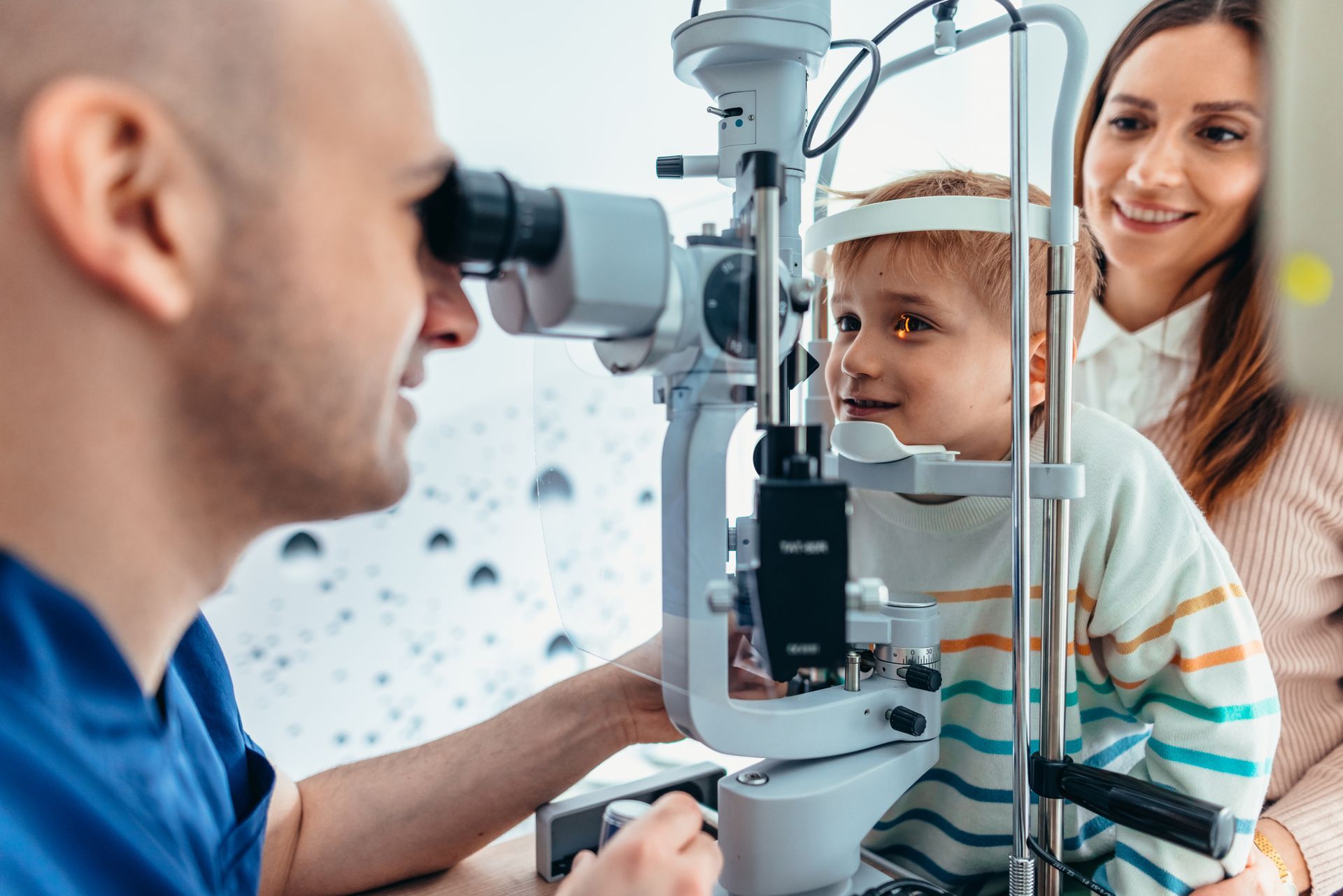
Regular eye exams are one of the most important steps a family can take to protect vision at every age, yet many households in Shelby Township, MI, go years without scheduling them. Knowing how often each family member needs to see a Family Eye Care Doctor can help you stay ahead of vision problems before they affect daily life, learning, and health.
Why Eye Exam Frequency Differs by Age
Recommended exam schedules vary because eyes change at different rates depending on life stage. A toddler's visual system is still developing, a school-age child depends on sharp vision to learn, and an older adult faces rising risks of glaucoma and macular degeneration. One universal schedule simply does not fit every member of a household.
Infants and Toddlers (Birth to Age 2)
Infants need their first comprehensive eye exam around six months of age. An optometrist checks for proper eye alignment, early signs of amblyopia (lazy eye), and healthy visual development. Catching problems this early makes correction far more effective.
Preschool Children (Ages 3 to 5)
Children ages three to five should have at least one comprehensive eye exam before starting kindergarten. Vision screenings at the pediatrician's office are useful but are not a substitute for a full optometric evaluation, which can detect issues that basic screenings miss.
School-Age Children (Ages 6 to 17)
Once a child enters school, annual eye exams are generally recommended. Children who struggle with reading, complain of headaches, or sit closer to screens than usual may need an exam sooner. Poor vision can easily be mistaken for a learning difficulty. A Family Eye Care Doctor evaluates not just clarity of sight but also how well a child's eyes work together, which is critical for reading and classroom performance.
Adults (Ages 18 to 59)
Healthy adults with no known risk factors can often manage with an exam every one to two years. Anyone who wears prescription lenses, works long hours on a screen, or has a family history of eye disease may benefit from annual visits. Vision changes in adulthood can be gradual, making routine checkups the most reliable way to notice shifts early.
Adults Over 60
After age 60, annual exams are strongly advised. The risk of cataracts, glaucoma, age-related macular degeneration, and diabetic eye changes rises significantly. Many of these conditions develop without obvious symptoms, making regular professional evaluation essential for preserving long-term sight.
What Signs Should Prompt an Unscheduled Visit?
Several warning signs mean you should not wait for your next scheduled appointment. Contact a local eye care provider promptly if anyone in the family experiences sudden blurred or double vision, eye pain or persistent redness, flashes of light or new floaters, squinting or headaches after close-up tasks, difficulty seeing in low light, or a child tilting their head or covering one eye to see.
These symptoms can signal conditions that respond best to early treatment. Waiting can allow a manageable problem to become a more serious one.
How Vision Changes Across Life Stages
Vision shifts in predictable ways that still require professional monitoring at each stage of life.
Children's eyes grow rapidly, and refractive errors like nearsightedness can worsen year over year during the school years. Many Macomb County kids spend significant time on screens, a habit that may accelerate myopia progression for those already at risk.
Adults typically experience presbyopia, the gradual loss of near-focusing ability, beginning in their early to mid-40s. This is a normal part of aging, but updated prescriptions and lens options manage it comfortably.
Seniors face a broader range of eye health concerns tied to systemic conditions. Families with grandparents living in Shelby Township, MI, near communities like Utica and Washington Township should encourage annual checkups, since many serious eye diseases affect this population silently before vision loss is noticeable. A Family Eye Care Doctor understands how to approach these age-related risks and can recommend appropriate screening intervals for older adults.t wait for symptoms to appear. Book your family's exams today.