Your first optometric eye care visit is an important step toward protecting your long-term vision, and knowing what to expect can make the experience much less stressful. Optometric eye care in Shelby Township, MI, is designed to be thorough, comfortable, and straightforward for patients of every age. Whether you have noticed changes in your vision or simply want a baseline check, this guide walks you through each stage of a comprehensive exam so you arrive prepared and confident.
What to Bring to Your First Eye Exam
Come prepared, and your first visit will go much more smoothly. Before you arrive, gather a few essential items to help your optometrist deliver the most accurate evaluation possible.
Here is a quick checklist to bring with you:
▸ Your current glasses or contact lenses, if you wear them.
▸ A list of any medications you take, including vitamins and supplements.
▸ Your vision or medical insurance card and photo ID.
▸ A record of your personal and family eye health history.
▸ Sunglasses, since your eyes may be dilated and sensitive to light afterward.
If you wear contact lenses and plan to have a contact lens evaluation, ask the office whether you should remove them before your appointment.
What Happens Step by Step During Your Exam?
A comprehensive optometric eye care exam typically follows a clear sequence from intake to discussion of results. Each step serves a specific purpose, and none of them should feel rushed.
Patient Intake and Health History
Your visit begins with a health history review. You will answer questions about your current vision concerns, past eye conditions, family history of glaucoma or macular degeneration, and any medications that can affect eye health. This information helps your optometrist tailor the exam to your individual needs.
Pre-Testing by a Trained Technician
Before you see the optometrist, a trained technician will perform several preliminary tests. These often include measuring eye pressure, checking peripheral vision, and assessing how your eyes respond to light. In Macomb County practices serving Shelby Township, digital retinal imaging is increasingly common as part of this pre-testing stage, giving doctors a detailed baseline record of your eye health.
Visual Acuity Testing
This is the familiar letter-chart test. You will read lines of letters from a set distance, one eye at a time. The results indicate how clearly you can see and help establish whether a corrective prescription may be needed.
Refraction
Refraction is the process your optometrist uses to determine your precise prescription, if you need one. You will look through a device called a phoropter and be asked which of two lens options makes a line of text clearer. It is a simple back-and-forth process, and there are no wrong answers. Many first-time patients find this the most interactive part of the visit.
Eye Health Evaluation
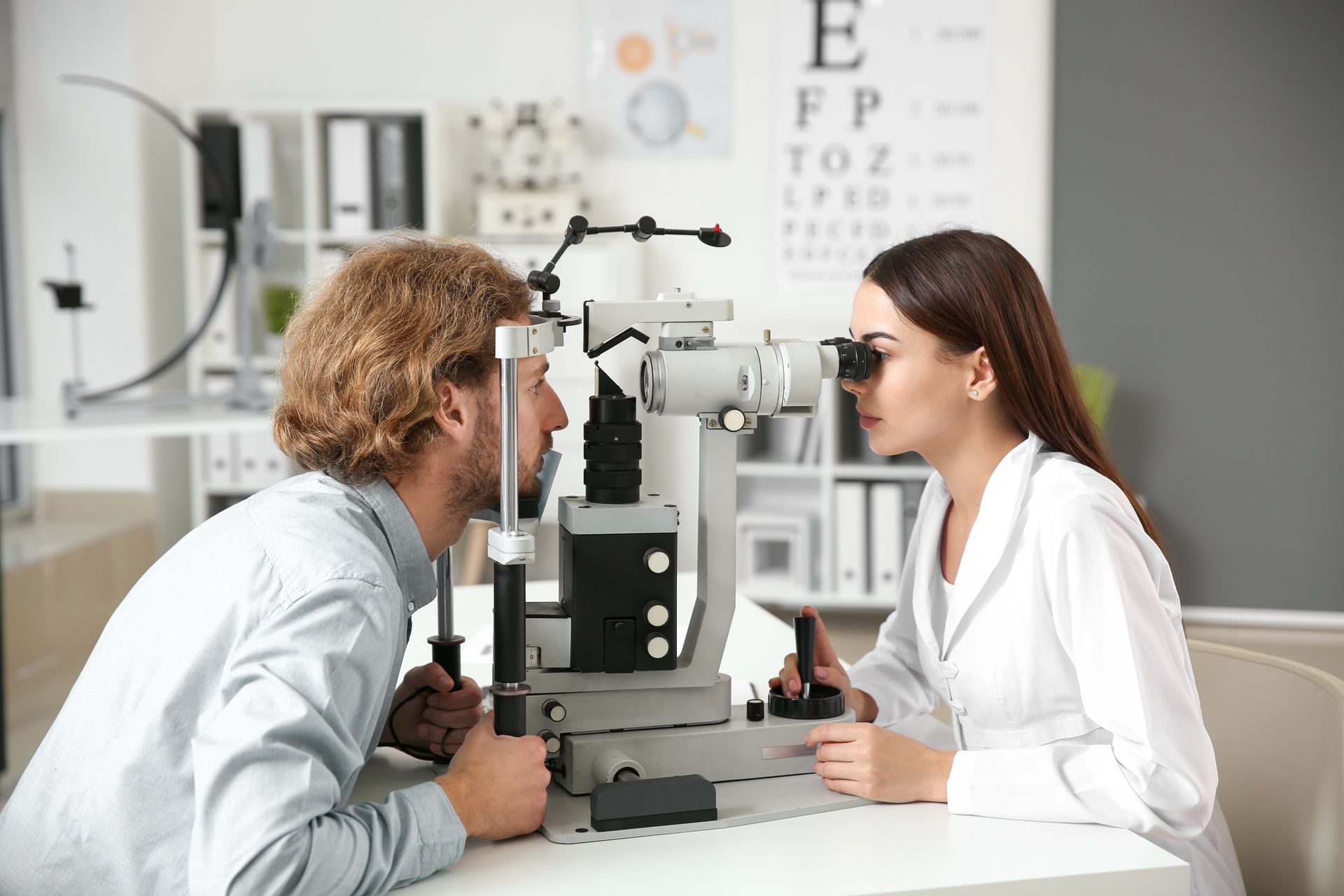
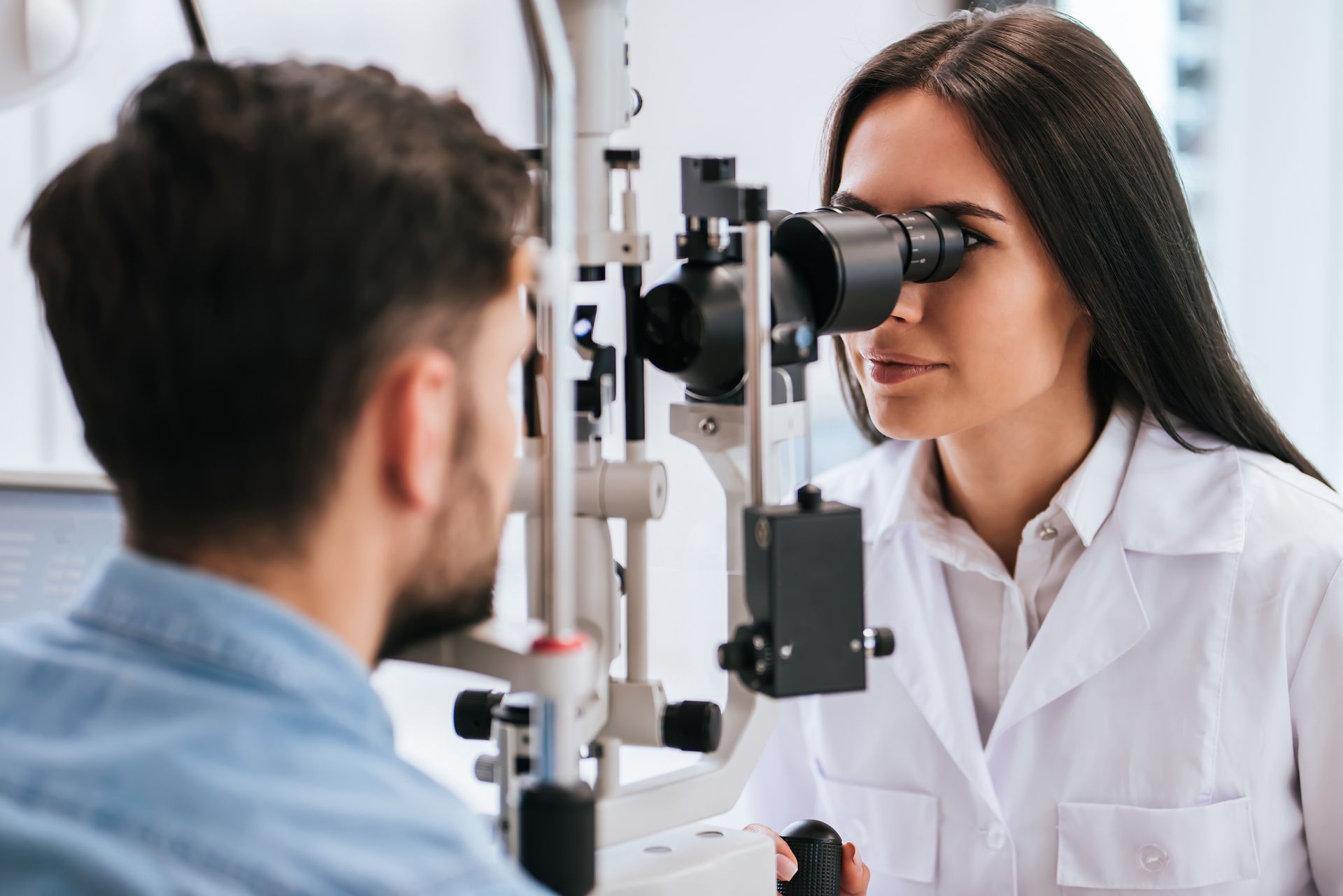
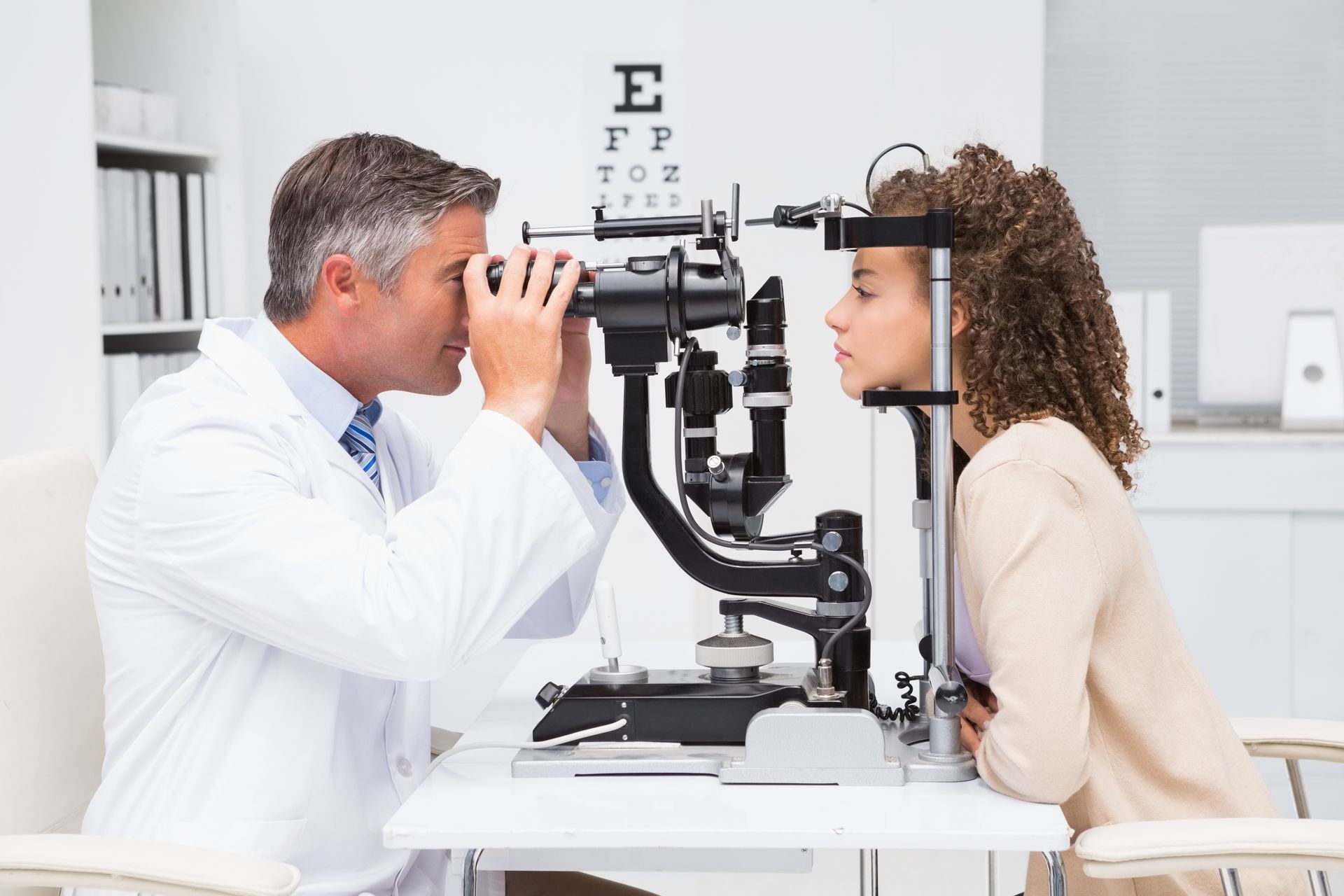
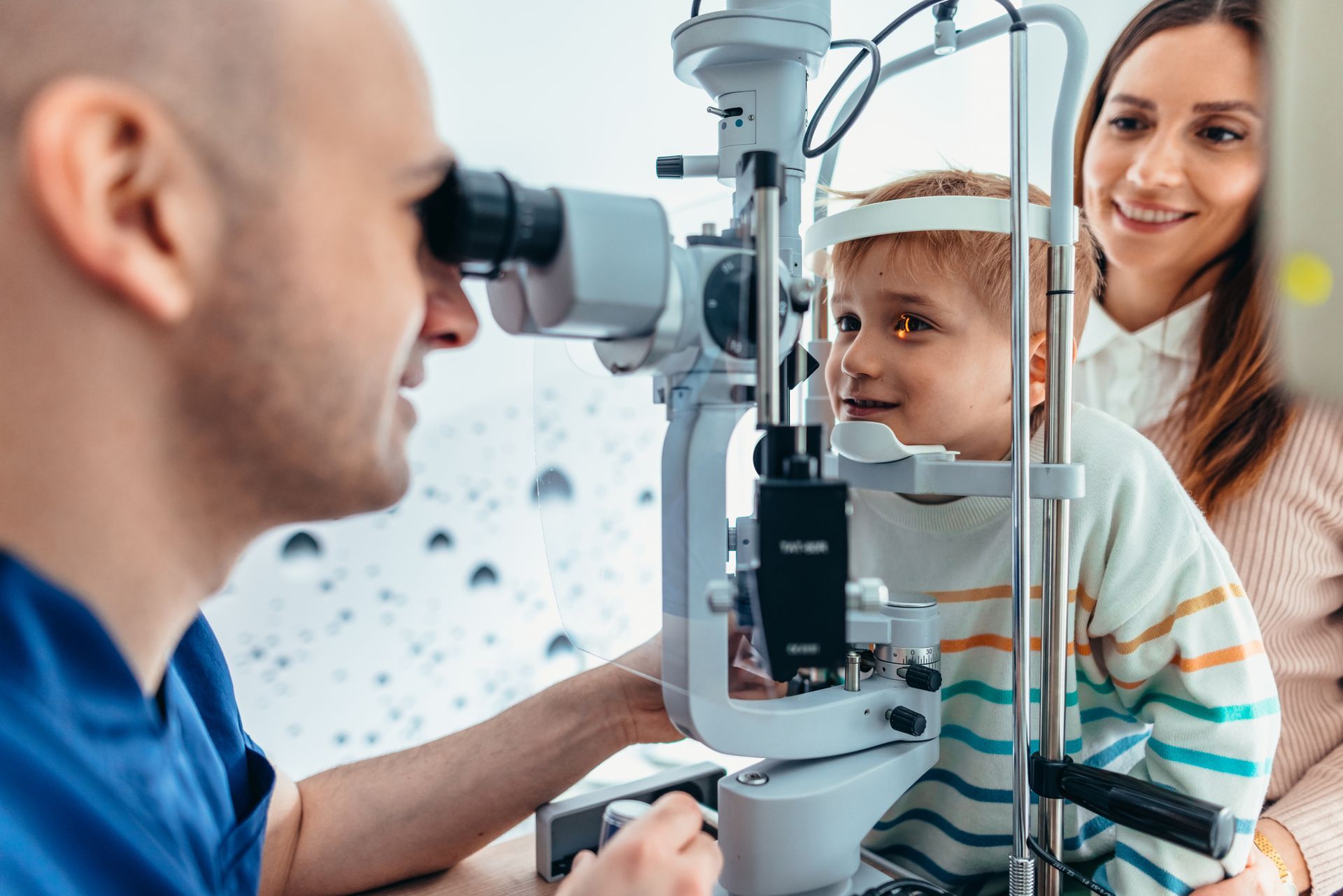
Your optometrist will examine the internal and external structures of your eyes using specialized instruments. This can include a slit-lamp exam to check the cornea, lens, and eyelids, as well as a dilated eye exam to inspect the retina and optic nerve more closely.
Dilation
Not every exam requires dilation, but it is common, especially for first-time patients or those with risk factors for retinal disease. Eye drops are applied to widen the pupil, allowing the optometrist to see more of the inside of your eye. Your vision may be blurry and your eyes may be light-sensitive for a few hours afterward, so plan for that when scheduling your appointment.
How Long Does the Exam Take?
A comprehensive eye exam generally takes between 30 and 60 minutes from intake to wrap-up. If dilation is included, add time for the drops to take effect. First-time visits may run slightly longer because the health history review is more detailed.
What Happens After Your Exam?
Once testing is complete, your optometrist will sit down with you to review the findings in plain language. You will learn whether your prescription has changed, whether any early signs of eye conditions were detected, and what your recommended follow-up schedule looks like. If a new prescription is needed, the optical team can help you choose frames and lenses suited to your lifestyle. If contact lenses are preferred, a separate fitting evaluation may be scheduled.
Adults with no known vision problems are generally advised to schedule optometric eye care at least once every one to two years. Patients with diabetes, a family history of glaucoma, or other risk factors may benefit from more frequent visits.
Does Insurance Cover My Eye Exam?
Many Shelby Township families carry vision plans such as VSP, EyeMed, or Blue Cross Blue Shield of Michigan. Contact the office before your optometric eye care visit to confirm which plans are accepted, and ask whether your medical insurance may cover portions of the exam, particularly if a health condition like diabetes is being monitored through the exam.
Ready to Book Your First Exam in Shelby Township?
Taking care of your vision is one of the simplest steps you can take for your overall health. Fraser Optical serves Shelby Township, MI, with optometric eye care from board-certified optometrists who provide thorough exams for patients of all ages. The Shelby Township location at 51026 Van Dyke Ave, at the NE corner of 23 Mile Road, offers extended weekday and Saturday hours to fit around busy Macomb County schedules.
To book your first exam, call
(586) 254-9620, visit
the contact page, or learn more about what your visit will include on the comprehensive
eye examinations page. You can also find the Shelby Township location and read patient reviews on the
Fraser Optical Google Business Profile.