
Eye Examinations for the Whole Family!
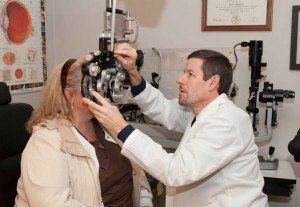
It is important to have your eyes examined by one of our board-certified optometrists.
Your eye exam consists of an external examination, followed by specific tests for visual acuity, pupil function, extraocular muscle motility, visual fields, intraocular pressure and ophthalmoscopy through a dilated pupil.
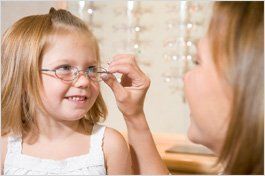
We specialize in treating kids. Your child should have their first eye exam at five years old. If you suspect something is wrong, we can check even earlier.
Early eye exams are important because children need the following basic visual skills for learning:
- Near vision
- Distance vision: tumbling E chart, Landolt C chart
- Eye teaming
- Eye movement
- Accommodation (focusing skills)
- Peripheral vision
- Hand-eye coordination
These are some of the conditions we diagnose during our eye examinations:
- Myopia (nearsighted)
- Hyperopia (farsighted)
- Presbyopia (age-related sight problems)
- Amblyopia (lazy eye)
- Diplopia (double vision)
- Strabismus (squinting)
- And more!
Contact Lens Eye Examinations
We also perform contact lens eye examinations. This specialty exam measures the diameter of your eye. We will conduct a K-reading to measure the surface as well.
Please schedule your eye examination today with one of Fraser Optical's board-certified optometrists!
Common Questions About Eye Care
How Is Optometrist Eye Care Different From a Basic Vision Screening?
Optometrist eye care is a clinically comprehensive service, while a basic vision screening only measures how well a person sees letters at a set distance. A board-certified optometrist, like those at Fraser Optical, uses advanced diagnostic tools to evaluate overall ocular health, detect systemic disease indicators, and prescribe corrective lenses with precision. Screenings performed at schools or pharmacies are not a substitute for a full clinical exam.
How Often Should Adults Schedule Eye Examinations?
Adults with no known vision problems should schedule eye examinations at least once every one to two years. Those over age 60, or those managing diabetes, hypertension, or a family history of eye disease, benefit from annual visits. Consistent optometrist eye care helps detect changes in the eye that may signal broader health concerns, allowing for timely intervention and better long-term visual outcomes.
Can an Eye Examination Detect Systemic Health Conditions Beyond Vision Problems?
Yes, a comprehensive eye examination can reveal signs of systemic health conditions that have not yet been diagnosed elsewhere. During a thorough evaluation, an optometrist may identify indicators of diabetes, high blood pressure, autoimmune disease, or even certain neurological conditions through changes in the retinal blood vessels or optic nerve. This is one reason why optometrist eye care at Fraser Optical is considered an important part of overall preventive health management.
How Does a Family Eye Doctor Approach Preventive Eye Care Across Different Age Groups?
A family eye doctor takes a proactive approach to preventive eye care by recognizing that vision needs change significantly from childhood through older adulthood. For younger patients, the focus is on detecting developmental issues early, while for adults, the priority shifts toward monitoring for conditions such as glaucoma, macular degeneration, and diabetic eye disease.
Whether you are scheduling a first visit for a child, managing a chronic eye condition, or simply staying on top of routine care, Fraser Optical is here to help. Contact our office today to schedule a comprehensive eye examination and take the next step toward better vision and long-term eye health for every member of your family.